
How Often Should You Clean Your Oven? (And When It’s Too Late)
Oven cleaning is often delayed until there’s a visible problem, but leaving it too long can affect cooking performance, create smoke, and make cleaning much harder.
If you’re wondering how often you should clean your oven in the UK, the answer depends on how frequently you use it and how quickly grease and residue build up.
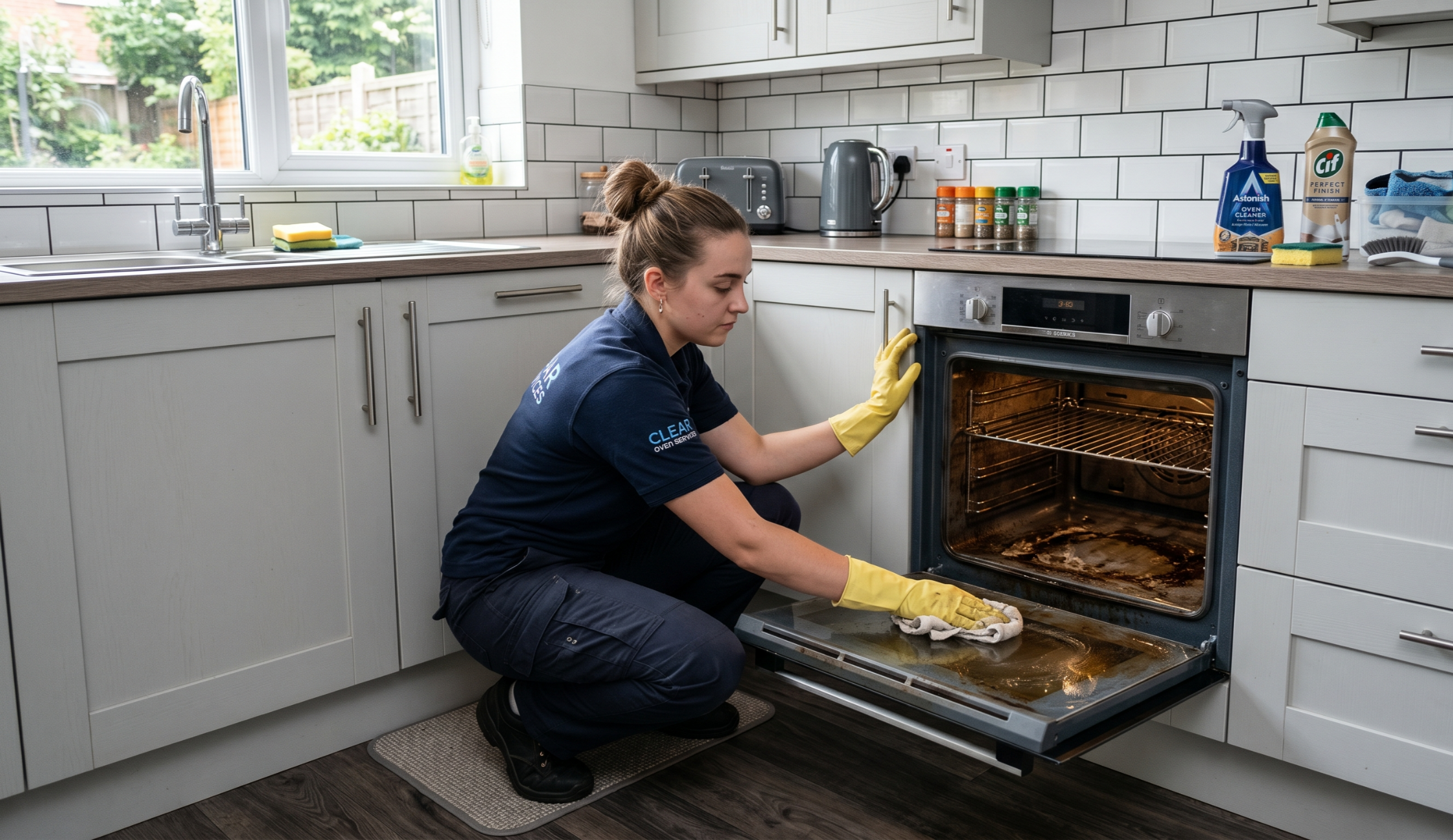
How Often Should You Clean Your Oven?
As a general guideline:
- Light use: every 4 to 6 months
- Moderate use: every 2 to 3 months
- Heavy use: every 1 to 2 months
Regular light cleaning between deep cleans can help extend these intervals and prevent heavy build-up.
Signs Your Oven Needs Cleaning
In many cases, your oven will show clear signs that it needs attention.
- Visible grease and burnt food inside the oven
- Smoke when the oven is heating up
- Unpleasant smells during cooking
- Food cooking unevenly
If you notice any of these, it’s time to clean the oven rather than wait.
When a Deep Clean Is Needed
Light cleaning is not always enough. A deep clean is required when residue has built up over time and cannot be removed with basic wiping.
This usually happens when:
- The oven hasn’t been cleaned for several months
- There is thick grease or carbon build-up
- Spills have been left to burn repeatedly
At this stage, standard DIY cleaning becomes less effective.
When It’s Too Late for DIY Cleaning
There is a point where cleaning the oven becomes significantly harder and time-consuming.
This happens when:
- Grease has hardened into thick layers
- Burnt food is stuck to the base or walls
- Strong odours remain even after cleaning
Trying to remove heavy build-up with aggressive scrubbing can damage the oven interior or leave residue behind.
DIY Oven Cleaning vs Professional Cleaning
DIY Cleaning
- Suitable for light cleaning and maintenance
- Lower cost
- Limited effectiveness on heavy build-up
Professional Oven Cleaning
- Removes stubborn grease and carbon deposits
- Uses specialised equipment and cleaning methods
- More effective for heavily used ovens
If the oven has not been cleaned regularly, professional oven cleaning in Poplar is often the more efficient option.
How to Keep Your Oven Cleaner for Longer
Simple habits can reduce the need for frequent deep cleaning.
- Wipe spills once the oven has cooled
- Clean small marks before they build up
- Use oven liners to catch grease and food
- Avoid letting residue burn repeatedly
Regular maintenance prevents the oven from reaching a heavily soiled state.
When to Combine Oven Cleaning with Other Services
Oven cleaning is often part of a wider kitchen or property clean. For example, it is commonly included during end of tenancy cleaning, where the kitchen needs to meet inspection standards.
Some households also book one-off cleaning to cover the rest of the property alongside oven cleaning.
Final Thoughts
How often you should clean your oven depends on how you use it, but regular maintenance makes a big difference. Leaving it too long leads to heavy build-up, making cleaning more difficult and less effective.
Cleaning little and often is the easiest way to keep your oven in good condition and avoid the need for more intensive cleaning later.
Helpful Cleaning Advice for Your Home
- How Often Should You Clean Your Oven? (And When It’s Too Late)
- How to Remove Common Carpet Stains (DIY vs Professional Cleaning)
- Cleaning Tips for Flats (Small Space Cleaning Guide)
- One-Off Cleaning vs Regular Cleaning – What Do You Actually Need?
- How to Clean a Very Dirty Oven (Without Damaging It)